


 Casinos
 Bonuses


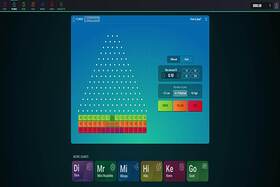
Spribe Plinko by Spribe
Bet limits: $0.1 - $100
Balance: $3,000


Physics meets probability in the hypnotic cascade of Plinko, where every ball drop tells a story of chaos theory and calculated chances.
Our simulator captures the mesmerizing dance of balls bouncing through pegs, letting you experiment with configurations, test betting patterns, and understand the mathematics behind the mayhem. Drop in below to master this deceptively simple game.
 Reset Credits
 Full Screen
 Close Full Screen
Bet limits: $0.1 - $100
Balance: $3,000
Bet limits: $1 - $100
Balance: $1,000
Bet limits: $1 - $100
Balance: $1,000
Bet limits: $0.1 - $25
Balance: $1,000
Bet limits: $0.1 - $100
Balance: $1,000
Bet limits: $0.1 - $50
Balance: $1,000
Bet limits: $10 - $10,000
Balance: $100,000
Bet limits: $0.1 - $10
Balance: $1,000
Bet limits: $0.2 - $50
Balance: $100,000
Bet limits: $0.1 - $50
Balance: $10,000
If you think Plinko is just dropping balls and hoping… you’re missing 90% of the game's strategic depth.
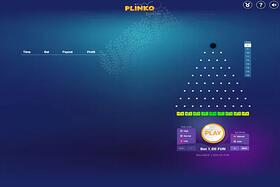
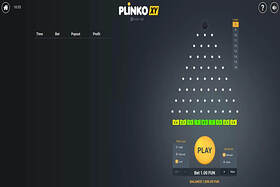
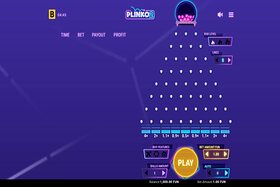
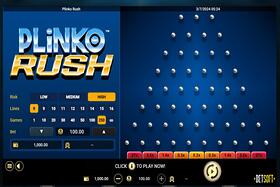
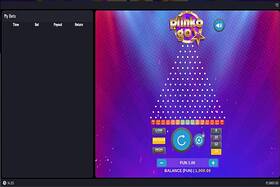
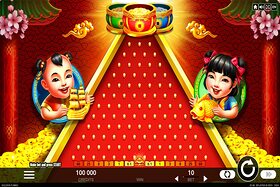
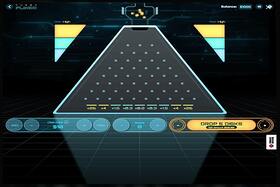
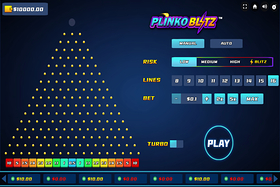
The interface presents a clean pyramid of pegs with your controls positioned intuitively around the game board. At the top, you'll find the ball release mechanism. The bottom showcases multiplier buckets ranging from the edges to the center.
Your balance and bet controls are conveniently located at the bottom of the screen.
To start playing, select your bet amount and start dropping the balls. It’s that simple!
Start with these tested combinations:
The gap between casual Plinko players and profitable ones comes from understanding volatility, distribution patterns, and bankroll management - knowledge best gained through simulation.
Real money Plinko moves fast. Balls drop, multipliers flash, balances fluctuate wildly. The simulator's slow-motion feature changes everything. Watch how balls naturally favor certain paths based on row count and starting position.
After 5,000 simulated drops, patterns become unmistakable:
Plinko delivers volatility that makes slots look stable. The simulator demonstrates this brutally but safely. My documented sessions show:
Important
Experiencing these swings with virtual credits builds emotional calluses. When real money enters play, you'll recognize volatility patterns rather than panicking during downswings.
Each row/risk combination creates unique gameplay:
Testing these configurations costs nothing in the simulator. Compare that to learning through real money - easily a $500-1000 education.
The simulator's auto-drop feature enables rapid strategy testing:
Personal discovery
After testing 20 different betting progressions over 10,000 drops each, flat betting with strict stop-losses consistently preserved bankrolls best. Not exciting, but mathematically superior.
Beneath Plinko's simple exterior lies fascinating probability mathematics powered by the Galton Board principle and binomial distribution.
Each peg represents a 50/50 decision point. Balls deflect left or right with equal probability (assuming fair implementation). This creates a binomial distribution pattern - the famous bell curve emerges naturally through physical interaction.
8-Row Game Analysis:
16-Row Game Analysis:
Key insight
Doubling rows doesn't double difficulty - it exponentially decreases edge probabilities while moderately reducing center chances.
Casinos design multipliers using inverse probability relationships:
Example Calculation
In 16-row high-risk Plinko:
The house edge hides in these calculations. Perfect compensation would yield 0.0015% × 66,667x = 1.0 return. The 1000x multiplier creates substantial house advantage.
Starting position significantly influences outcomes, though not how most players expect:
Center Drops:
Edge Drops:
Recommendation
Use center drops for maximum excitement and true probability distribution. Edge drops serve conservative players seeking reduced volatility.
Modern Plinko variants offer simultaneous multi-ball drops. This doesn't change individual ball probabilities but creates fascinating visual patterns:
Be Aware
Multi-ball modes trigger psychological responses. Despite identical mathematics, seeing five balls hit low multipliers simultaneously feels worse than five separate losses. The simulator helps desensitize these reactions.
The Galton Board principle ensures long-term distribution normalization, but short-term results vary wildly:
100 Drop Sample Results:
10,000 Drop Sample Results:
This demonstrates why session length matters enormously. Short sessions encounter extreme volatility, while extended play approaches mathematical expectation.
Different platforms offer varying house edges:
Always verify specific multiplier tables before playing. A 0.5% house edge difference compounds significantly over thousands of drops.
You've watched thousands of virtual balls bounce their way to mathematical destiny. The patterns make sense now. The volatility doesn't scare you anymore.
Those 50-ball losing streaks? Just Tuesday in Plinko land.
Here's what separates Plinko simulator graduates from casino casualties: you understand the game's personality. Plinko rewards patience, punishes greed, and delivers chaos wrapped in beautiful probability mathematics.
Start small when you make the jump.
If you're planning $10 drops eventually, begin with $1. Your simulator skills transfer perfectly, but real money adds weight to every bounce. That center bucket suddenly feels a lot more important when it's your actual cash riding each ball.
Most people think Plinko is pure luck. You know better. It's probability distribution playing out in real time, and you've got front-row seats to the show.
The good news is you're already ahead of 95% of players who dive in cold. What happens next depends on your discipline, not the pegs.
Don't Stop at Plinko
I bet you're a bit like me - once you master one game, you're hungry for the next challenge. We have a few simulators you don’t want to miss out:



















 Level 4Poland


