


 Casinos
 Bonuses


Gambling Winnings Tax in Canada: Everything You Need to Know

Kirsty Caldwell
Gambling Compliance Consultant

- Founder and CEO of Betsmart Consulting, a consultancy firm specializing in gambling compliance, regulations, licensing, and more;
- Nearly 2 decades of experience in the gambling industry, focusing on regulatory compliance;
- Former Head of Compliance at William Hill;
- Expert in building and leading compliance teams globally, ranging from large PLCs to small start-ups;
- Qualified in governance, risk and compliance, which translates into comprehensive guides on gambling laws and regulations.
 100%
100% 6 min
6 min Updated on Nov 20, 2024
Let’s say you have been gambling in Canada and have been lucky enough to have a few winning streaks. Now you are in profit and someone’s asked you how much tax you will have to pay? Well, that depends not only on where in Canada you normally reside but also on whether you are classed as a recreational or professional gambler. Which are you?
Luckily, most players are recreational gamblers (playing as a hobby rather than professionally) and, therefore, will not have to pay tax. However, the identification of recreational or professional gamblers is very important, so you do need to know what to consider when making your decision.
In this article, I will explain what the difference is between professional gambling, where the winnings you make pay for your life expenses, and recreational gambling, where you treat gambling as a hobby and enjoy the thrill but don’t rely on gambling winnings as “income”.
If you make the wrong decision, you could be subject to significant fines, and so this article is here to help you understand which classification you fall under and what this means regarding completing your tax return.
Hobby or Business?
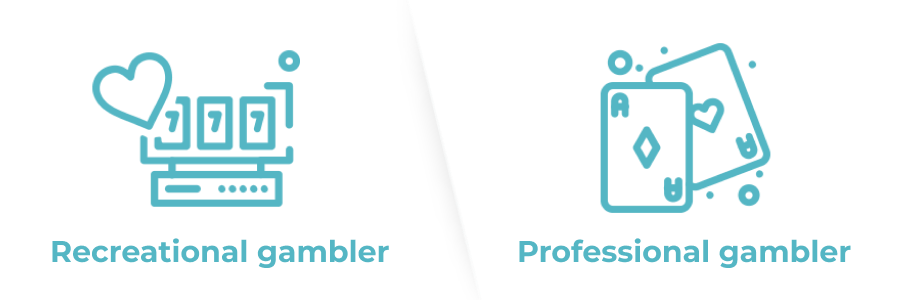
Firstly, what is a “recreational gambler”?
Well, if you gamble occasionally, don’t often make special trips to tournaments or pre-planned gambling events, don’t plan/schedule your gambling activity as part of your normal day, and don’t rely on the winnings to live and pay your bills – then you are probably a recreational gambler.
That being the case, recreational gamblers do not pay tax on any winnings from online or land-based gambling from lotteries, casinos, sports betting, or horse racing. You won’t even have to declare the profit from gambling itself either, as long as you are a recreational gambler.
However,
If you make any profit from investing any of the winnings, either from stocks or from an interest paying savings account, then that does need to be declared and may be taxable as it is classed as normal income.
Remember that there are both federal (Canada) and provincial (Ontario, Quebec, etc.) tax laws, so you need to consider both when completing tax returns.
As there is no official definition of “recreational gambler”, how can you be sure that you are?
Professional Canadian Gamblers
Well, to be classed as a “professional gambler”, you would need to be more organised with your approach to gambling and do some or all of the following:
- Use winnings from gambling as your main source of income (pay bills etc.)
- Gamble regularly over an extended period with no other job or source of regular income
- Your gambling winnings are your primary source of income
- Often attend gambling events, possibly sometimes travelling to do so
- Often practice or attend gambling training courses
- Plan, organise, or schedule your gambling activity as a main part of your life
Basically, if you take a planned and organised approach to your gambling and rely on the profits to pay your bills, this will most likely be classified as “professional gambling” and, therefore, subject to tax.
In such circumstances, you need to declare your gambling activities as you will be considered to be acting as a self-employed person.
One point to note is that
There are no winnings limits or thresholds over which you automatically become a “professional”. That is to say, if you win C$50,000 but you don’t meet the criteria above for a “professional gambler”, you may still be a “recreational gambler”.
The amount of winnings doesn’t matter, it’s more about how you approach your gambling activity.
Winnings or Losses?
OK, so, if you are classed as a professional gambler, have a bad year, and so make a loss, can you offset that against your tax bill?
Yes, in most circumstances, you can.
When classed as a professional gambler and therefore a self-employed person, you can run as a business and therefore claim costs (for example, training courses, travel expenses for attending tournaments etc.) and losses, etc. against tax, as most businesses do.
Keep in mind that
As a professional gambler, you need to keep detailed records of all your gambling activity and the activities you undertake to carry on your “business,” and therefore, some understanding of business matters such as accounting would be beneficial.
How Much Tax Will I Pay?
As we have said above, there are both federal and provincial taxes and both the allowances and tax rates vary depending on which province you are resident in.
At the time of writing (October 2024), federal tax rates range from 15% to 33% depending on the amount of worldwide income, with the initial 15% rate levied on income between C$0 and C$55,867.
For provincial tax, allowances/thresholds vary from around C$29,500 in Nova Scotia up to just over C$148,000 for the lowest tax rate band. Provincial tax rates also vary widely, from 4% to 25.75%.
Here’s a summary of the tax rates per province:
| Province | Income tax rates (as at October, 2024) |
|---|---|
| Alberta | From 10% for income up to C$148,269 increasing to 15% above C$355,845 |
| British Columbia | From 5.06% for income up to C$47,937 increasing to 20.5% above C$252,752 |
| Manitoba | 10.80% for income up to C$47,000 12.75% from C$47,000 to C$100,000 17.40% above C$100,000 |
| New Brunswick | From 9.4% for income up to C$49,958 increasing in stages to 19.5% above C$185,064, depending on total income |
| Newfoundland and Labrador | 8.7% for income up to C$43,198 increasing in stages to 21.8% for above C$1,103,478 |
| Nova Scotia | From 8.79% up to C$29,590 increasing in stages to 21% above C$150,000, depending on total income |
| Ontario | From 5.05% up to C$51,446 increasing in stages up to 13.16% over C$220,000, depending on total income |
| Prince Edward Island | From 9.65% for income up to C$32,656 increasing in stages to 18.75% above C$140,000, depending on total income |
| Québec | From 14% for income up to C$51,780 increasing up to 25.75% for over C$126,000, depending on total income |
| Saskatchewan | 10.5% for income up to C$52,057 12.5% between C$52,057 and C$142,057 14.5% above C$142,057 |
Remember, these are on top of the state tax charges!
Conclusion
With the combination of state and provincial tax requirements, plus the wide variety of tax allowances and rates, it’s essential to understand your obligations.
If you believe that you either meet the criteria of a professional gambler or, as a recreational gambler, have accrued interest or capital gains from investing your winnings, we strongly suggest discussing your circumstances with a tax advisor.
That way, you will get advice and guidance based on your individual situation.
 6
6 0
0 Thank you for voting.
Kirsty Caldwell
Explore More Laws And Regulations Guides


Laws And Regulations Q&As
Got questions about Laws And Regulations?
Ask a Question